


About us
Operations
Sustainability
Investor relations
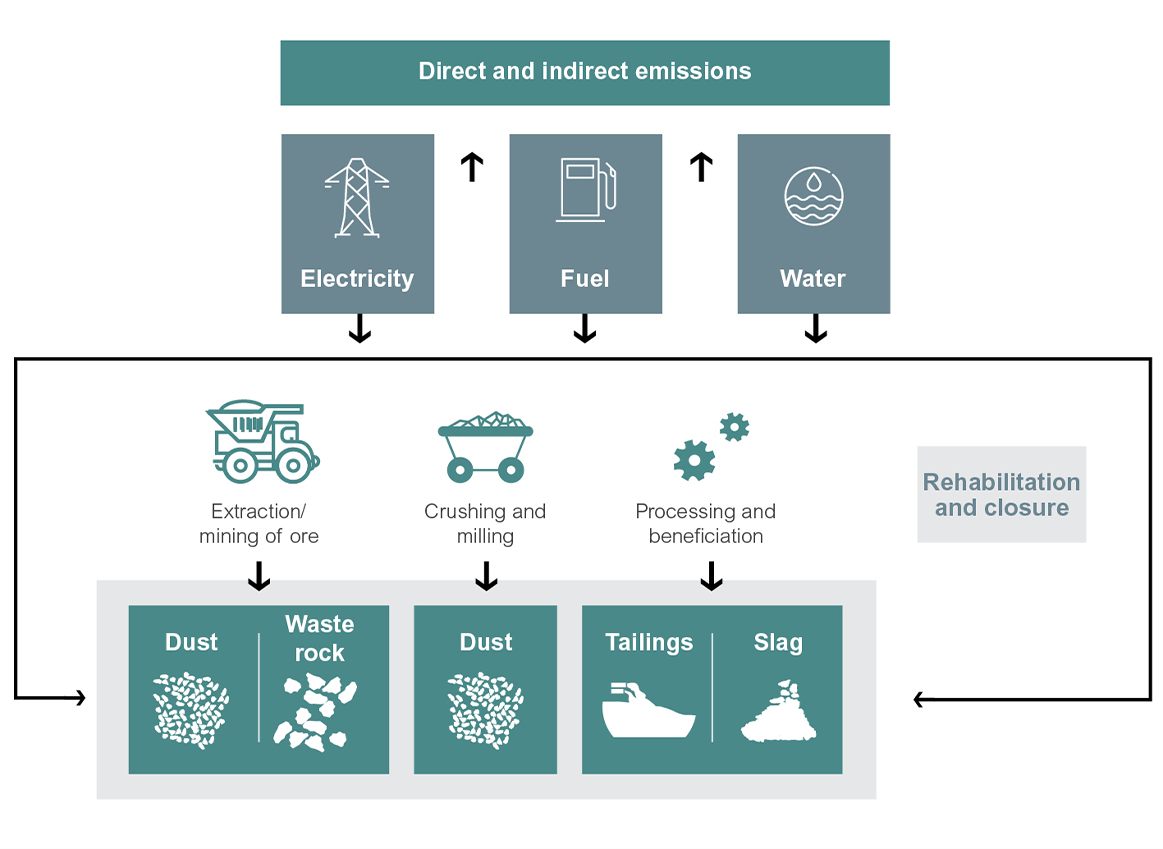
ARM recognises its responsibility to manage and mitigate potential negative impacts on the natural environment from our activities. We take a precautionary approach to environmental stewardship that aims to eliminate or reduce environmental impacts wherever possible, with processes in place to mitigate impacts where these are unavoidable. ARM's climate and water journey reflects a deliberate evolution from compliance-driven beginnings to a forward-looking, integrated strategy rooted in long-term value creation.
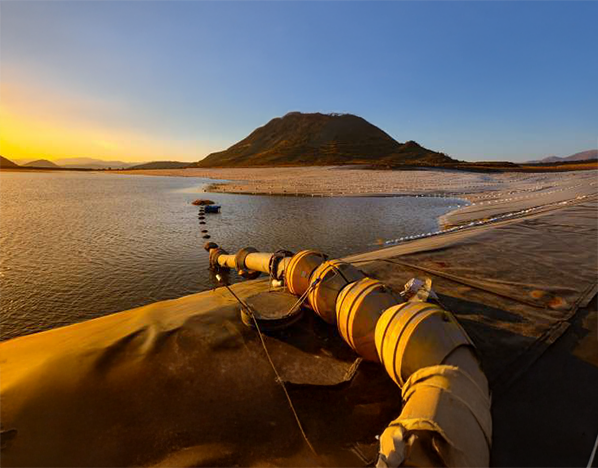
Policies, systems and systems monitoring
We recognise our responsibility to manage and mitigate potential negative impacts on the natural environment from our activities. The ARM safety, health and environment (SHE) policy entrenches our commitment to conserving and protecting our environment from harm and degradation. The policy stipulates the efficient use of energy and water, responsible TSF management, assessment and management of physical climate change and extreme weather risk, minimisation of waste, and reduction in pollution.
Separate climate change and water policies align management of these issues at the operations with the related ICMM position statements, the TCFD and IFRS S2.
The environmental management systems (EMSs) at the operations align with ISO 14001:2015, the international standard on environmental management. Black Rock, Beeshoek, Khumani and Two Rivers mines are certified in terms of this standard. Modikwa Mine, Nkomati Mine and Machadodorp Works were previously ISO 14001:2015-certified and, while not formally recertified, remain aligned with the standard.
Operational EMSs measure and monitor key environmental indicators that are consolidated and regularly reviewed at divisional and group levels. Environmental performance metrics and trends are discussed at SHEQ meetings, quarterly operational meetings, divisional sustainable development and social and ethics committee meetings, and the ARM social and ethics committee meetings.
Identifying and mitigating environmental impacts
Potential impacts on the natural environment are identified through:
Environmental objectives and targets are in place at each operation for its significant environmental aspects. These include reducing or avoiding pollution, waste and resource use, as well as effective waste management. Progress against these targets is reported internally during operational management reviews.
Environmental management programmes (EMPs) are developed to mitigate identified impacts as required by NEMA and its regulations.
Operational and corporate risk profiles, which include environmental risks, are reviewed and updated at quarterly risk workshops. Risks are reported and mitigating strategies are discussed and planned by the group-level management risk and compliance committee, social and ethics committee, as well as the audit and risk committee. Environmental and related risks, particularly for climate change and water, are being integrated into ERM processes.
Alignment with global standards and practices
Our approach to responsible environmental practices is informed by the legal and other requirements to which we subscribe, and ARM's participation in industry initiatives, particularly the ICMM and MCSA (and its environmental policy committee). These interactions provide important insights, share good environmental practice, facilitate collective engagement with regulators and stakeholders, and promote benchmarking. Our management of environmental issues aligns with the relevant ICMM position statements, including:
Our joint-venture partnership with Assore in the ARM Ferrous division provides access to important industry initiatives such as life-cycle assessment and life-cycle inventory studies, waste management initiatives, and energy-efficiency initiatives of the International Manganese Institute and International Chromium Development Association.
Other industry forums and business initiatives in which ARM or its joint-venture partners participate include the Ferro Alloy Producers' Association and the Association of Mine Managers South Africa.
Training and awareness
Every employee and contractor is responsible for compliance with the standards and policies specific to each operation. They receive regular training on relevant environmental policies, standards and procedures, including at induction, refresher courses and job specific training. Training needs analyses identify focus areas for training.
As part of the compliance and reporting programme for climate change and water, annual workshops at the divisions and operations are facilitated by an external climate change specialist. The workshops cover evolving climate change and water risks and opportunities, raise awareness, gather data, track progress against targets, and inform the approach to complying with and responding to developing requirements and expectations. Attendees include senior management, engineers and environmental managers on-site, as well as the corporate environmental manager and divisional SHEQ managers.
Assurance
Environmental performance and compliance are regularly assured through internal operational environmental inspections and audits, external legal compliance audits, and compliance audits on authorisations, such as the commitments in EIAs, EMPs and water use licences. External certification audits in terms of ISO 14001:2015 assure alignment of the EMSs with the standard at ARM Ferrous mines and Two Rivers Mine. Selected sustainability information in this ESG and climate change and water reports, as well as ARM's King V alignment, is externally assured.
ARM acknowledges the critical global challenges that climate change presents and the effects they may have on our business, our stakeholders and the world. We recognise climate change as a strategic priority and are committed to supporting the global effort to reduce greenhouse gas emissions and mitigate physical climate risks.

Our climate change and energy management strategies and reporting draw on various frameworks, guidelines, good practice and regulatory compliance requirements and also seek to meet multiple and evolving stakeholder reporting requirements. To address these issues comprehensively, we published a supplementary report on climate and water management. This report uses the recommendations of the Task Force on Climate Related Financial Disclosures (TCFD) and the Position Statement of the International Council on Mining and Metals (ICMM) on Climate Change and Water Stewardship as the core frameworks.
We recognise water as a shared, finite resource with vital social, cultural, environmental and economic value. It is essential for human wellbeing, community livelihoods and ecosystem health, and is a critical input across all stages of our mining and beneficiating operations.
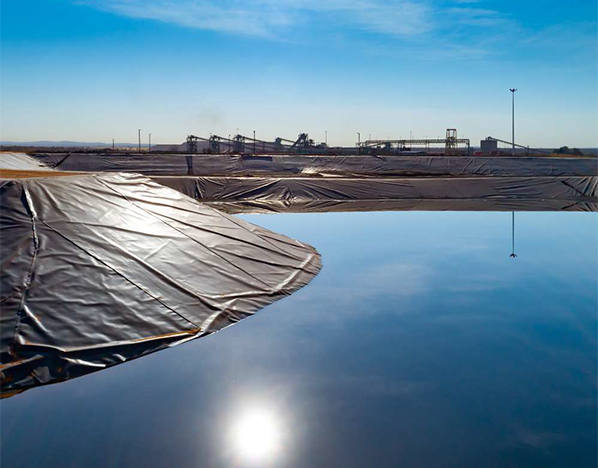
Water is used at ARM's operations in milling, beneficiation, cooling and for dust suppression during blasting, on haul roads, and at ore-transfer points. It is also a critical component in our supply-chain commodities, including electricity, chemicals and explosives. Our employees need access to water for drinking, sanitation and hygiene facilities and purposes.
Eight of the nine operations under our direct or joint control are in water-stressed areas and some face significant catchment-level water risks due to ageing infrastructure, poor maintenance of infrastructure, lack of funding and capacity to deliver new infrastructure, and the impacts of climate change on water supply.
Water stewardship
Water stewardship is integral to ARM's business strategy. Our approach is catchment-based and aims to be collaborative in delivering on our strategic objectives. At group and operational levels, strategic objectives include water considerations such as the availability, protection and management of water sources and the use of appropriate technologies and other mitigating measures to address water needs or manage water impacts.
Our proactive and holistic water-management strategy facilitates how we sustainably manage these resources. It is built around identifying and mitigating water-related risks, exploring opportunities and engaging with partners to achieve collective action.
Water availability, consumption and pollution are recognised as key risks and included in both our operational and corporate risk registers, tailored to the operational risk contexts. We are incorporating both water and climate change into the ERM process as part of the resilience pillar of our climate-change strategy framework.
We align with the ICMM position on water stewardship and report progress against its commitments. We support the ICMM's updated guidance on consistent water reporting and have begun implementing it to enhance transparency, which is a key enabler of stakeholder trust and informed decision-making in an era of growing pressure on water resources.
As part of our broader commitment to nature-related risk management, we also support the ICMM position on nature.
Each operation sources water from permitted rivers, boreholes or municipal supplies in line with its water use licence (WUL). Detailed water balances are maintained to track use and KPIs drive efficiency improvements, where relevant. Water-saving awareness is promoted through staff meetings, posters, campaigns and community engagements.
Where feasible, sites operate closed-loop systems that maximise recycling and minimise discharge. Clean and contaminated water streams are managed separately, ensuring process water is reused before fresh water is drawn. Technologies such as reverse osmosis (RO) are applied, where appropriate, to treat water for reuse.
We explore natural, sustainable solutions such as wetland formation, particularly for mine-closure plans.
Water efficiency is considered across the broader value chain, identifying opportunities to reduce water intensity upstream and enhance recycling downstream. By embedding these principles into procurement, production and waste management, we aim to optimise use holistically and build resilience across operations and supply networks.
Surface and groundwater quality are routinely monitored to ensure WUL compliance, assess environmental impact, and guide mitigation where necessary. Aquatic and riverine biomonitoring is in line with the site-specific WUL requirements. Additional measures to reduce consumption, increase storage and avoid downtime include using dust-suppression surfactants, which improve the effectiveness of sprayed water and limit evaporation.
We believe that water-related challenges should be owned collectively. These issues are shared and, to be appropriately resolved, they require collaboration by governments, civil society, the private sector and local communities. Accordingly, our operations participate in various regional water forums and stakeholder platforms that enable practical dialogue and coordination on local water-supply challenges. These platforms also provide space to explore how climate change and evolving regulations may impact both the availability and cost of water.
Key water milestones achieved in F2025 included:
Operational water withdrawal
Total operational water withdrawal increased by 3% to 24.1 million m3 (F2024: 23.3 million m3). Khumani Mine accounted for 21.1% of group water withdrawn, Bokoni Mine 21% and Modikwa Mine 18%. Reported operational withdrawal at Black Rock increased by 37% because of improved water accounting following the installation of additional flow meters. Khumani Mine water withdrawal increased by 27% due to increased production and higher rainfall harvested.
Water reuse efficiency, a KPI in monitoring and managing consumption and losses decreased to 73% in F2025 (F2024: 78%). Total water output increased to 3.7 million m3 in F2025 (F2024: 2.5 million m3).
Context-based water targets are in place at all operations and include quantitative and qualitative targets and commitments relevant to the multidimensional risks specific to each operation. At the end of the year, 81% of these targets were met or on track to be met.
Water-discharge incidents
All operations run closed-water circuits to maximise recycling and reuse. However, water discharges are unavoidable in certain instances, such as during heavy rainfall. Discharges are categorised from level 1 to level 5 based on the size/scale of the impact, sensitivity of receiving environment, and remediation/ clean-up requirements. Level 1 to 3 incidents (insignificant to moderate impact) are reported internally at operations. Level 4 (high impact) and level 5 (major impact) incidents are reportable to relevant authorities.
Discharges are reported in terms of quality and volumes, and investigated to identify root causes, learnings and key actions to remediate affected areas and prevent recurrence. Clean-up and rehabilitation processes are initiated immediately, documented and comprehensively reported to the respective internal governance structures as well as authorities.
In F2025, we had no level 5 incidents. There were seven level 4 incidents – two each at Beeshoek Mine, Black Rock Mine and Machadodorp Works, as well as one at Nkomati Mine, all of which were addressed (F2024: no level 5 incidents and three level 4 incidents).
During processing and beneficiating, mined ore is finely ground and mixed with water and chemicals to separate minerals from waste. Tailings (or slurry) is the mix of finely ground waste rock and water that remains after beneficiation.
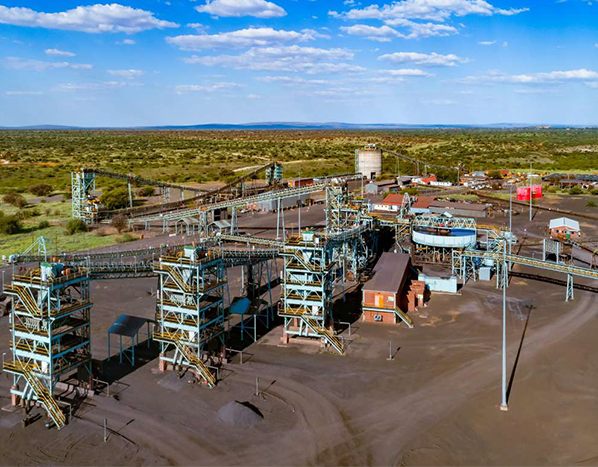
Responsible TSF management is a significant strategic issue, with major financial and reputational value. Poorly managed TSFs can lead to catastrophic failures, resulting in material negative impacts on the people and environment downstream from these facilities. Responsible TSF management is consequently a significant focus for investors, NGOs and other stakeholders.
ARM is committed to TSF management and standards that align with national and global good practices for the preservation of health, safety and the environment in all phases of the mining life cycle. Our internal TSF standards and practices align with local regulations and internationally recognised good practice.
Conformance with Global Industry Standard on Tailings Management (GISTM) in F2026
GISTM sets a global benchmark for achieving strong social, environmental and technical outcomes in managing TSFs, with the goal of zero harm to people and the environment. ARM and its joint-venture partners have adopted GISTM at all mines, covering 13 active TSFs. More information is available in the F2026 report on conformance to GISTM on our website: www.arm.co.za.
ARM is committed to preventing or mitigating the environmental impacts of our activities, aligned with the principles of responsible mining. Impacts may include disturbing biodiversity, changes in topography and land use, ground and surface water, waste, air pollution and other impacts.
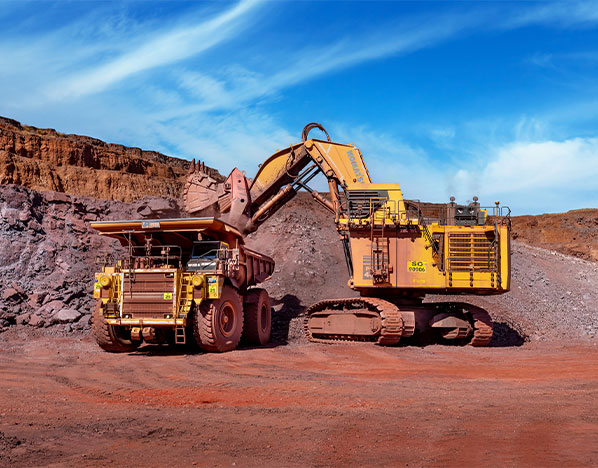
ARM considers mine closure as an integral part of our mining activities to ensure sites are restored to agreed land end use or state at the end of a mine’s life, in line with conditions in the environmental authorisations, such as EMPs and agreed closure plans. Wherever possible, operations undertake rehabilitation activities concurrently.
Annual closure and rehabilitation quantum assessments are conducted by independent specialists in terms of the requirements of relevant legislation, EMP closure commitments, and applicable good practice, including ICMM guidance. Liabilities for rehabilitation obligations are funded by trusts at each mine, with annual contributions and/or guarantees. Rehabilitation provisions align with regulatory requirements, including those in the NEMA: Financial Provisions Regulations currently awaiting promulgation. Effective governance structures are in place for each trust to oversee planning and budgeting.
For more information, please refer to 2026 ESG report for the Schedule of financial provision for closure and rehabilitation.
ARM’s approach to biodiversity conservation aligns with the ICMM’s nature position statement. ARM is monitoring guidance from the ICMM nature working group to inform our approach to implementing the ICMM nature position statement, which sets out members’ approach to contributing to a nature-positive future. Biodiversity baselines are established during studies as part of the land-use planning aspects of EIA and/or EMP processes. These processes also identify potential risks to biodiversity and the landscape, and include structured engagements with community forums, local municipalities and other affected stakeholders.
All operations have developed biodiversity action plans (BAPs) and implemented biodiversity management programmes (BMPs). BAPs are designed to protect and restore biological systems and include commitments to conserve protected areas such as wetlands, zones of endemism, archaeological and heritage sites, as well as protected and endangered species identified by the International Union for Conservation of Nature.
More information on biodiversity at the operational level is available in the 2026 ESG supplementary datasheets.