

About us
Operations
Sustainability
Investor relations
ARM is committed to maintaining a safe and healthy working environment for all employees and contractors to achieve our goal of zero harm. Ensuring a safe working environment is a moral imperative and improves productivity, efficiency and relationships with our stakeholders. We regard health and safety as fundamental indicators of operational performance and it sits at the core of our values and strategy.

Policies and systems
ARM group safety policies are adapted at the operations into safety policies and strategies that address local conditions, specific challenges and milestones. ARM's wellness management programme integrates occupational hygiene, health and safety, and aligns with industry good practice and the requirements of relevant legislation.
Operational safety and health policies and management systems align with ISO 45001, the international standard on health and safety management systems. Black Rock, Beeshoek, Khumani and Two Rivers mines are certified in terms of ISO 45001.
Identifying and mitigating risks
Baseline risk assessments at each operation have established potential hazards and risks that may affect their activities. Continuous workplace hazard identification and risk assessments identify current safety and health risks. Risk assessments are conducted daily, before beginning any new task, expansion or change to current operations as well as in planning and executing projects. They include input from regulators, specialists, original equipment manufacturers (OEMs), our employees and labour representatives.
Effective controls are identified and implemented to mitigate risks. Standard operating procedures used for on-the-job training include hazards and mitigating controls.
Training and collaboration
Safety training is provided at induction and in continual on-the-job and competency training to entrench a culture of safe working practices. Supervisors conduct regular planned task observations to ensure correct safety procedures are understood and followed, and to create opportunities to coach and improve safe task execution.
Operational safety committees, which include representatives from management, employees and organised labour, meet regularly to discuss safety and promote a partnership approach to safety management. Contractors are treated as employees. They receive the same training and are included in our safety reporting, as required by legislation and industry standards.
Ongoing roll-out of safety initiatives
CCM has been fully implemented at ARM Ferrous mines and is at an advanced stage at ARM Platinum mines. CCM is a globally recognised systemic process that establishes and maintains critical controls to manage the risk of material unwanted events.
All trackless mobile machinery (TMM) at ARM mines is equipped with collision awareness systems (vehicle-to-vehicle and vehicle-to-person detection systems). The operations are working with original equipment manufacturers, DMPR and MCSA, to develop more advanced safety solutions for TMMs. ARM mines are implementing level 9 collision avoidance systems1 according to timelines agreed with the DMPR and reporting monthly progress.
To ensure continuous improvement, ARM has implemented an executive visible felt leadership (VFL) programme where executive teams visit all workplaces to support employees. Rigorous reporting and investigations of high potential incidents (HPIs) – near-miss events with the potential for serious injury – ensures that all HPIs are reviewed, and systems and corrective actions are implemented timeously to prevent catastrophic hazards.
Alignment with global standards and industry practices
ARM participates in industry health and safety forums and initiatives to share and adopt good practice to improve health and safety performance. These include:
Khumani Mine rolled out a focused section 23 awareness campaign during the year. Section 23 of the Mine Health and Safety Act (MHSA) enshrines employees' rights to refuse dangerous work and to leave a dangerous workplace. This legal provision fosters a culture where employees take active responsibility for their safety and are empowered to identify and act on hazards before they escalate into incidents.
The campaign was driven across multiple platforms, including health and safety forums, pre-shift meetings, SHE representative meetings and contractor sessions. Supervisors reinforced section 23 in pre-shift talks as a standing agenda item and it was reaffirmed as a monthly Talk Topic to ensure sustained visibility.
The campaign included posters and information sheets that explained the purpose of section 23, outlining the steps employees should follow to exercise their rights and indicating where supporting documents could be accessed. A factsheet was also circulated, providing simple, step-by-step guidance on completing the required documents to formally report concerns or incidents.
As part of the initiative, a survey was conducted to measure employees understanding of section 23 and to clarify what constitutes reasonable grounds for invoking their rights under the Act.
By equipping employees with knowledge and practical tools, the campaign strengthened confidence in applying section 23, contributed to a safer working environment, and supported Khumani Mines commitment to its zero-harm vision.
Mining is inherently demanding long shifts, strenuous physical activity and challenging environmental conditions all increase the risk of fatigue among employees. Fatigue is a critical safety concern, especially for operators of heavy machinery.
Beeshoek Mine uses a wearable electroencephalogram-based fatigue monitoring system for operators of primary load‑and‑haul equipment. This continuously measures brainwave activity for early detection of fatigue symptoms. Livemonitoring and automated visual alerts prompt employees to rest before fatigue impairs performance, helping toprevent accidents and injuries. Alerts are sent to the fatigue analyst, control room and supervisors, enhancing operational oversight and enabling early intervention. The system also enables trend analysis to identify individuals or situations that require more focused attention.
Employees with high levels of fatigue or repeated alerts are interviewed and those with persistent fatigue are referred to the wellness centre for further medical or psychological assessment. Those with psychological fatigue are referred to specialists for professional help.
Since its introduction, the system has eliminated fatigue-related incidents at the mine, significantly enhanced employee's self‑management of fatigue, increased awareness, and enabled proactive safety interventions. This has helped to foster a culture of openness, improved safety standards and productivity, and enhanced compliance with DMPR reporting requirements of fatigue-related incidents.
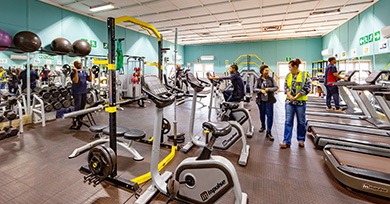
ARM's integrated wellness management programme to support health and wellness in the workplace reflects our commitment to safe and sustainable mining and our values. The programme is designed to prevent occupational health hazards from affecting employee health by actively identifying and managing health risks as well as chronic conditions that may affect wellness and quality of life.
Policies and systems
ARM's wellness management programme integrates occupational hygiene, health and safety. It includes comprehensive programmes to identify and manage the occupational, primary and chronic health challenges that affect our workforce.
Health and wellness policies are set at group level, with implementation and oversight across ARM, coordinated by the group occupational health and wellness superintendent. Programmes at the operations are overseen by trained occupational health and wellness superintendents/officers.
Clinics at the operations are run by reputable external occupational healthcare service providers, our partners in providing occupational health and wellness services to employees and contractors. All ARM-managed operations have appointed registered occupational hygienists.
The occupational healthcare system is linked to access-control systems to ensure employees know their health status. Only those declared medically fit to perform work enter potentially hazardous workplaces.
The wellness management programme aligns with SANS 16001 (the South African national standard on disease and wellness management) and the three mines in ARM Ferrous are certified in terms of the standard. Two Rivers Mine is certified in terms of ISO 45001:2018 (the international occupational health and safety standard). Modikwa Mines wellness management programme is aligned to SANS 16001, but they are not yet certified. Bokoni Mine is developing its wellness programme. Nkomati Mine and Machadodorp Works are currently on care and maintenance.
The wellness coordinators at Modikwa, Two Rivers, Khumani, Beeshoek and Black Rock mines have completed training on the implementation of SANS 16001, which includes HIV and Aids.
Identifying and managing risks
We take a precautionary approach to occupational health and wellness that aims, as far as possible, to limit at-source workplace exposure to hazards through a combination of:
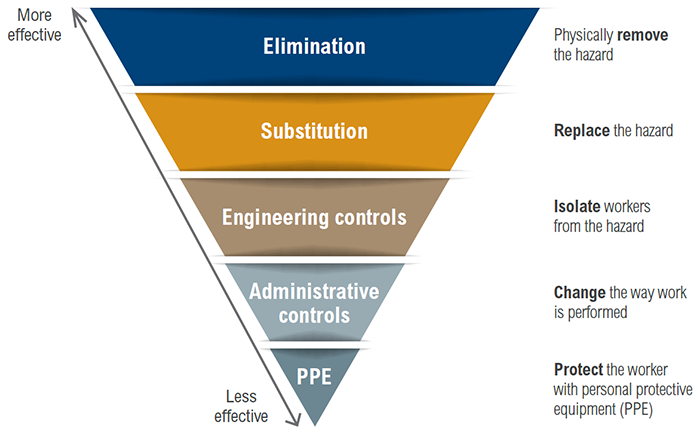
Comprehensive risk-based mandatory medical surveillance programmes at each operation identify and monitor health risks relevant to each workplace and occupation. These programmes align with the requirements of the MHSA (mining operations) and OHSA (smelters). Health risks are mitigated using the hierarchy of controls.
Hierarchy of controls
Ongoing occupational hygiene surveillance
Occupational hygiene surveillance provides leading indicators on exposure to hazards in the workplace. Surveillance examinations are conducted at pre-employment medicals, periodic surveillance medicals, transfer medicals and exit medicals. Baseline information for relevant indicators such as hearing and lung capacity is measured and recorded, while regular monitoring identifies any deterioration from baselines. Where deterioration is detected, counselling, training and PPE (if appropriate) are provided.
Primary healthcare services
Primary healthcare services, including treatment and counselling, are provided at wellness centres at each mine, except for Nkomati and Bokoni mines. At Nkomati Mine, a full-time nurse provides daily healthcare services at the mine clinic. Bokoni Mine has a site occupational health clinic.
Although ARM operations are not located in areas where malaria is prevalent, we nevertheless run malaria awareness programmes in support of the Masoyise Health Programme and SDG 3.
Alignment with regulations, industry practices and national and global goals
The wellness management programme complies with regulatory requirements and supports national and global goals, including:
Dust
Airborne dust levels are controlled using water sprays, surfactants and extractor fans. Employees are given dust masks where dust cannot be eliminated at source.
Diesel particulate matter (DPM)
DPM is classified as a group 1 carcinogen by the World Health Organization, and the ICMM has released a comprehensive guidance document to reduce and manage DPM exposure effectively in underground mining operations. The MCSA group environmental engineers committee is developing a DPM management standard for member companies to adopt. ARMs underground operations are developing comprehensive DPM management plans to align with the ICMM and MCSA guidance as this develops.
In March 2025, the DMPR introduced an occupational exposure limit (OEL) of 0.1mg/m3 for elemental carbon, a key component of DPM. Mines were given until 26 June 2025 to begin implementation.
Modikwa and Two Rivers mines have completed their baseline assessment on DPM workplace concentrations. Modikwa Mine has fitted all primary machines with diesel particulate filters (DPF) and Two Rivers Mine is progressing well in rolling out DPFs. Vehicles at Bokoni Mine have low-emission tier 3 engines that produce emissions within the new OEL and monitoring of emissions is ongoing. Black Rock Mine has battery electric vehicles, diesel machines with tier 3 engines, and uses ultralow sulphur diesel (10ppm).
ARM's human capital strategy fosters a high-performance, entrepreneurial and innovative culture by providing growth opportunities that empower employees to reach their full potential and develop fulfilling careers. We support the ICMM's collective commitment to promoting diversity, equity and inclusion. Our approach to human capital management entrenches equality, fair labour practices and freedom of association. We continue to attract, develop and retain skilled and experienced professionals.
Our human capital strategy is derived from five strategic pillars and entrenched into ARMs entrepreneurial culture, leadership development and investment in our employees to position ARM as an employer of choice.


Supports value creation by:
Each pillar of the strategy embeds transformational targets to improve reporting, monitoring and evaluation.
ARM's compelling employee value proposition aims to position the group as an employer of choice to attract, develop and retain talent by including intrinsic and extrinsic motivators, such as:
ARM's code of conduct, human capital policies, procedures and practices align with South African labour laws and South African Board for People Practices (SABPP) national standards. This ensures that they meet stipulated legal and ethical requirements, including conditions of employment, equitable pay and leave regulations, and limit excessive working hours.
We benchmark our human capital policies and procedures against international global practices by participating in and contributing to professional bodies, such as the SABPP and the Global Top Employer certification programme.
The group executive: human resources is the senior executive responsible for implementing the human capital strategy and the executive accountable for related legal compliance. Human capital performance indicators are monitored and reported in operational and divisional meetings. The primary governance structures overseeing human capital include:
Executive level
Board level
Strategic workforce planning
Strategic workforce planning maps talent for the next 10 years to highlight potential future skills gaps. The three to five‑year workforce plan identifies future workforce needs to meet ARMs strategic and operational objectives. Current core and critical skills are compared to the workforce plan and anticipated attrition rates. The planning process includes a focus on diversity, equity and inclusion to ensure the group achieves its transformation goals.
Talent management
Future workforce needs are addressed through learning and development, on-the-job training and cross-operational exposure for potential successors. Where necessary, the company fills vacancies through external appointments.
The talent management system integrates with the talent portal and employment equity system to align talent, succession, career development and transformation goals.
Our performance management system ensures performance is rewarded appropriately, promotes staff engagement, and provides constructive feedback for development and performance improvement.
Performance reviews
The performance enhancement process includes contracting, review, assessment and reward. Employees contract on performance goals, track developmental areas and receive feedback on their performance.
Incentive programmes
The short and long-term incentive programmes promote performance and drive a culture of enterprise and innovation. Variable pay structures are designed to be fair and achievable, with a focus on pay-for-performance, particularly at senior levels. Incentives include modifiers for ESG-related indicators such as safety, BBBEE and diversity, equity and inclusion, as well as climate-change performance targets.
Fair and equitable remuneration
ARM offers equitable, market-related and competitive salaries to all its employees. Regularly benchmarking remuneration practices against comparable South African mining companies ensures alignment with national industry standards and legislative requirements, including minimum wages.
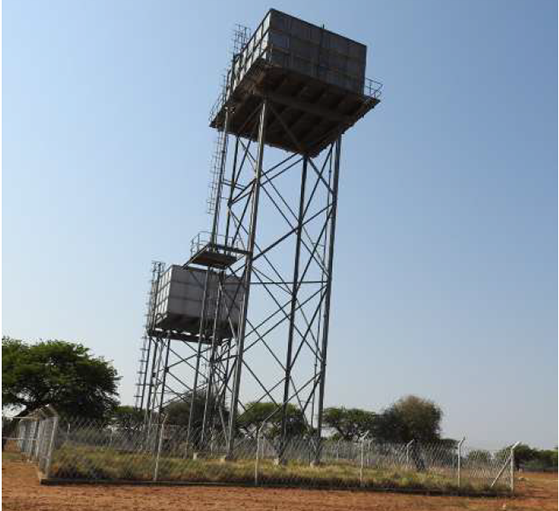
We partner with communities and other stakeholders to invest in infrastructure and social projects designed to improve the lives of people in these communities and enhance community resilience. These initiatives also help strengthen our relationships with community stakeholders and benefit employees who live there.
Stakeholder mapping and engagement
Stakeholder mapping identifies community stakeholder groups and some stakeholders contact operations directly. Stakeholder engagement strategies, policies and plans at the operations guide formal and informal meetings. Minutes are generally taken at formal engagements.
Primary community stakeholders include traditional leaders, elected or approved representatives, and community interest groups such as business, youth or womens forums. Regular engagements provide valuable opportunities to build relationships with our communities and to understand their needs and expectations.
Challenges facing our host communities and solutions are identified through engagements with community forums, municipalities, the DMPR, and other local and national stakeholders. Where possible, we look for opportunities to collaborate with peers and other industry bodies to improve coordination and increase social impact in areas of mutual interest.
Oversight and reporting
Divisional executives and senior management oversee stakeholder engagement at the operations. Stakeholder and community engagement are agenda items at operational, divisional and board meetings, which include discussions of community concerns or disputes.
Grievance mechanisms
Communities can raise grievances through formal stakeholder structures or the externally managed ARM whistleblower facility. Stakeholder groups also approach the operations directly and often address concerns to municipalities, which communicate with the operations through local mayors.