About us
Operations
Sustainability
Investor relations
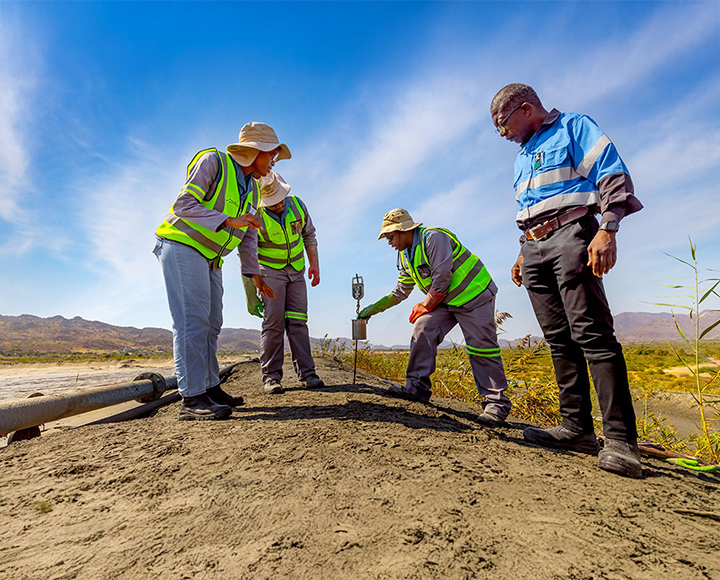
ARM's values, governance structures and ethical leadership guide our actions to conduct our business activities with integrity and respect for the environmental and societal contexts in which we operate. As a leading mining and minerals company, ARM is cognisant not only of our impacts on the world around us, but also of the opportunities to make a positive contribution to growth and development in the societies in which we operate.
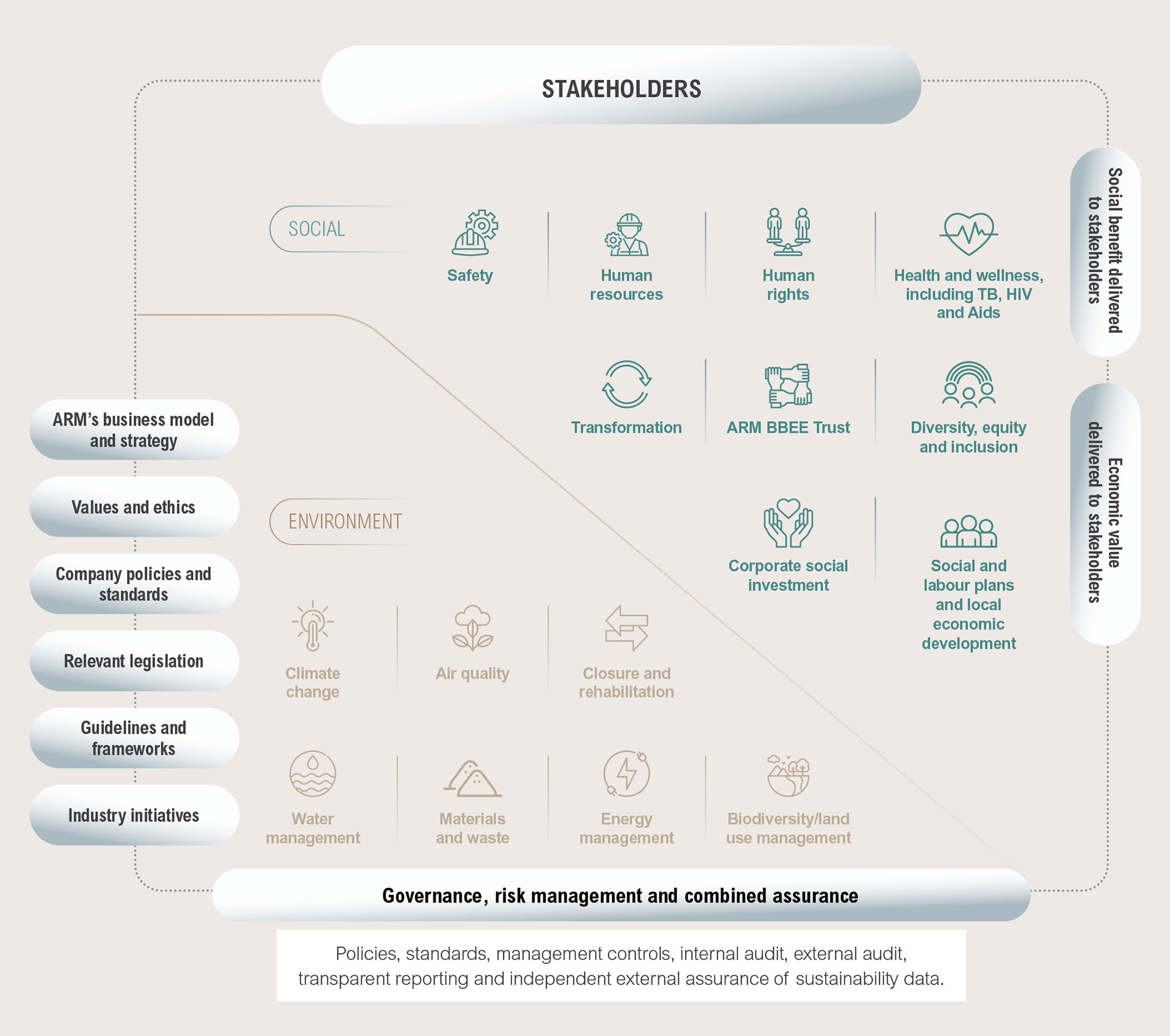
ARM's values explicitly acknowledge that social responsibility, good corporate governance and environmental stewardship are essential aspects of generating economic value for shareholders and social benefit for stakeholders. Taking a broader view to include nonfinancial aspects ensures ARM's long-term sustainability.
The ESG Report provides more detail on our performance and approach to sustainable mining.
Our approach to sustainable miningARM's approach to sustainable development considers these best practices, guidelines and frameworks






ARM is committed to responsible and sustainable mining and beneficiation, with zero tolerance for harm to employees, contractors, host communities and the environment.
The board is the foundation of the corporate governance system and is accountable for ARM's performance, which includes sustainable development. It ensures the company's long-term strategy and purpose are implemented sustainably and that business is conducted ethically and with integrity.
ARM contributes to the goals underlying the SDGs. We categorise this contribution into those SDGs that closely align with our core activities (main focus), those where we make a direct contribution, and those to which we indirectly contribute.
Our approach to reporting uses a double materiality lens, with the matters that have the most material impact on ARM’s ability to create value (financial materiality) over the short, medium and long term discussed primarily in the integrated annual report. This ESG report and ARM’s climate change and water report focus on the group’s most material impacts on the environment and society (impact materiality).
During the year, we conducted a review of our material matters against peer reporting practices, the requirements of various sustainability-related reporting frameworks and guidelines, group and divisional risks and opportunities, and the issues discussed in meetings of the relevant governance structures across the group.
These were supplemented with current stakeholder interests identified through a survey of environmental, human capital and occupational health and safety departments across the operations.
Our climate change and water management strategies and reporting draw on various frameworks, guidelines, good practice and regulatory compliance requirements and also seek to meet multiple and evolving stakeholder reporting requirements. To address these issues comprehensively, we published a supplementary report on climate and water management. This report uses the recommendations of the Task Force on Climate Related Financial Disclosures (TCFD) and the Position Statement of the International Council on Mining and Metals (ICMM) on Climate Change and Water Stewardship as the core frameworks.
See more on climate change
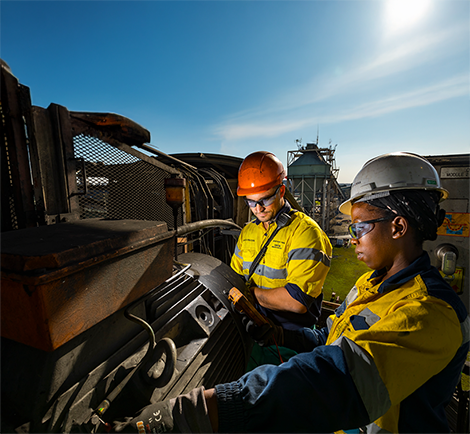
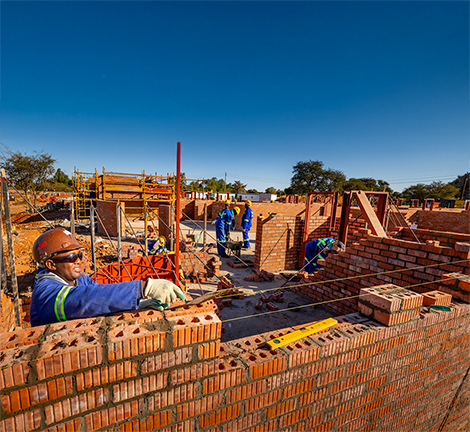
Our operations are located in some poor and remote parts of the country and provide employment opportunities, skills development and educational support in these areas. Infrastructure investments and support for social projects in local communities support socio-economic development and improve community resilience and sustainability. ARM's preferential procurement and enterprise development programmes support entrepreneurship and economic growth among historically disadvantaged South Africans (HDSAs) and in local communities, create jobs, improve market access for South African capital goods and services, and increase economic activity in the areas around our operations.
Transformation at ARMR26.2 billion
paid as taxes and royalties.
R764 million
invested in community development.
23 369
employees and contractors impacted by our operations.
73%
Improved HDSA representation in management.
1 243
Bursaries provided.
R22.0 billion
Paid employees as salaries, wages and benefits.
R1.4 billion
Invested in training initiatives to improve the skills of employees.
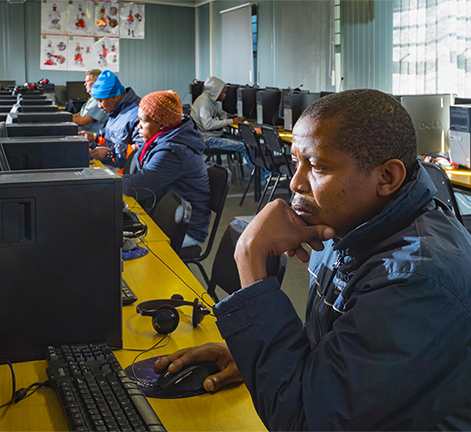
Provided adult education and training (AET) to
233 employees
ARM's commitment to being a responsible corporate citizen drives our support of the development of the communities in which we operate through social investment and local economic development projects. These initiatives aim to build capacity in communities and prioritise women, HIV and Aids projects, the upliftment of people living with disabilities, youth and the socially destitute.
Partnering with communities and other stakeholders for social upliftment is a strategic priority. Investment in local communities is aimed at driving socio-economic development and improving community resilience and sustainability.
Most of ARM's operations are located in remote areas near communities with pressing socio‑economic challenges. This provides an opportunity to make a meaningful difference by investing in infrastructure and social projects that can have a significant positive impact. Delivering these initiatives strengthens our relationships with local communities and benefits employees who live there. Regular engagements improve our understanding of community needs and expectations, and promote community ownership of projects by including beneficiaries from the planning phase.